
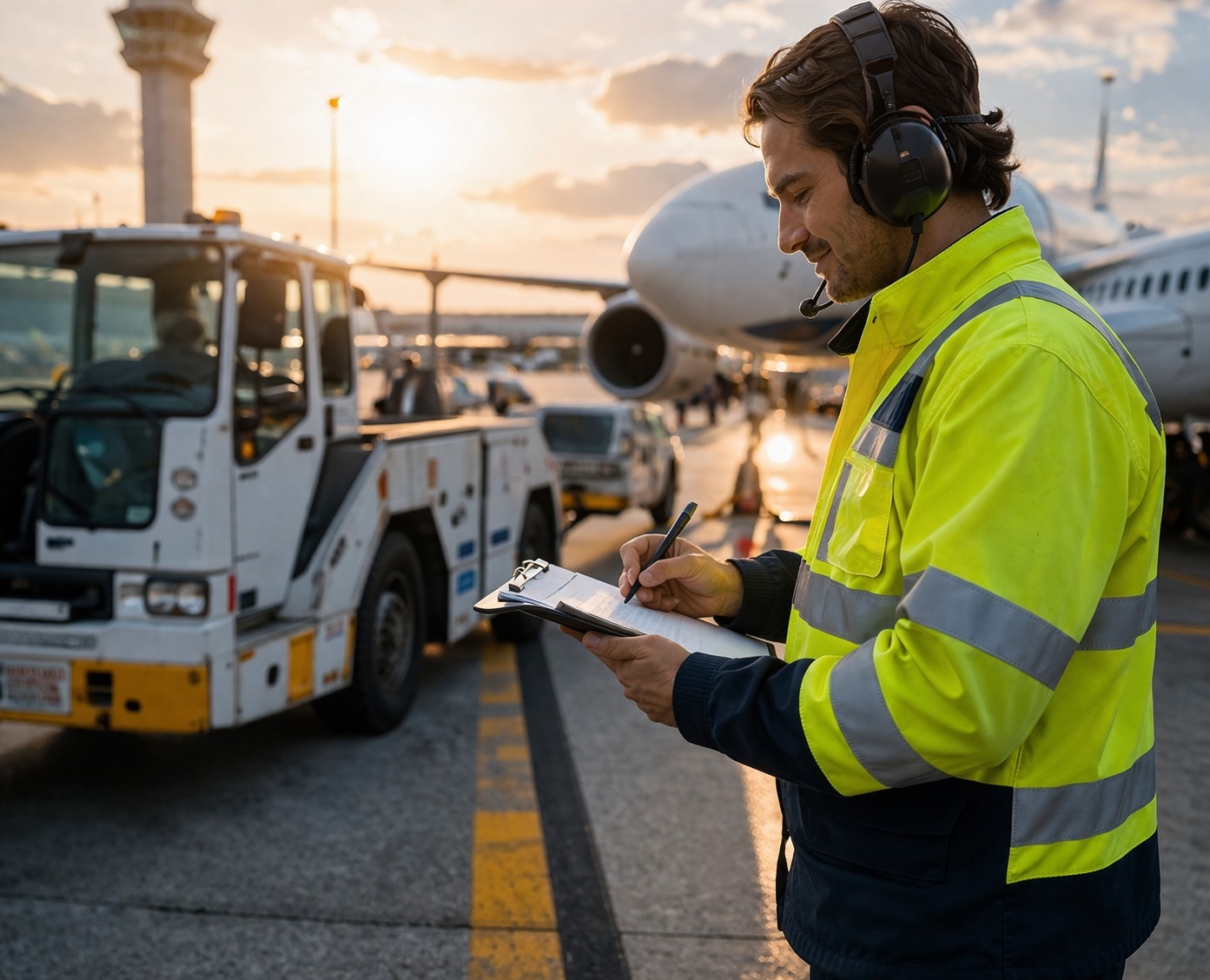
For anyone who wants to start their career in the aviation industry without becoming a pilot or cabin crew, airline ground staff can be the most practical option and starting point. Since it’s fast-paced, people-facing, and gives you real exposure to how airports actually function.
Who Is The Airline Ground Staff?
So basically, airline ground staff are the people who manage everything that happens on the airport ground. Their role begins before passengers boarding and continues even after passengers leave for the aircraft.
On a regular day, they are helping passengers check-in, sorting out security issues, answering questions, and making sure that boarding happens smoothly without any sort of confusion. And, at the same time, they are also coordinating with the internal teams to ensure that there are no flights delayed and no mistakes.
So if you want to broadly understand the job role of an Airport Operation staff member, it’s a mix of customer service and operations. You’re dealing with people, but you’re also part of a larger system where timing and accuracy really matter.
Roles And Responsibilities Of Airline Ground Staff
The duty of airline ground staff is not just a desk job with a fixed routine; here some days are calm while others can be super hectic with no fixed schedule, especially during peak travel season.
The role usually involves:
- Boarding assistance: This is usually the first point where passengers interact with the ground staff first. They help with ID verification, issue boarding passes, and sort out seat preferences. When it’s time to board, the focus shifts to keeping things smooth and making sure passengers line up properly.
- Passenger support services: People will come to you with all types of questions, missed flights, excess baggage, and last-minute changes. Some may be calm, some might be stressed; how you respond to them will make a big difference.
- Baggage co-ordination: Lost or delayed baggage is a more common type of issue than people think. Ground staff help with this, finding luggage, and filing complaints.
- Gate management: At the boarding gate, timing matters a lot. You ensure passengers board in the correct order and handle all last-minute changes.
- Customer service problem resolution: Not every passenger interaction is smooth; any delay in flight arrival or departure, cancellations, or even overbooking these situations are required to be handled with calm and patience.
What Are The Skills Required To Work As Airline Ground Staff?
You are not required to be perfect at the job, but some skills make the job much easier, especially in fast-paced airport environments.
| Skill | What It Really Means On The Job |
| Customer Service Mindset | If you are at an airport ground staff job, you are interacting with passengers all day. When you are patient, polite, and approachable, it really helps you, and you can handle different kinds of situations. |
| Communication Skills | You should be able to explain things clearly, whether it’s a confused passenger or a stressed one. |
| Conflict Handling | Delays and cancellations can frustrate people. In such situations staying calm and listening to people becomes a key part of the job. |
| Time Management | Airports run on strict timelines. You need to stay organised to complete tasks quickly within a given timeline only. |
| Teamwork And Adaptability | You’ll be working with different teams every day. Since things can change at any moment, being flexible and cooperative is important. |
Salary and Career Growth In Canada
For those who are planning to work in Canada, ground staff roles offer steady income and clear growth opportunities.
Let’s understand this step-by-step.
- Entry-level Salary
Most beginners usually start between CAD 30,000 and CAD 45,000 per year depending on the airport and airline they are working in.
- Mid-Career Growth
As you gain more confidence and experience in handling airport operations, salaries can go up to CAD 50,000-60,000 annually, especially when you step into supervisory roles.
Career Progression
Over time, you can move into roles like:
- Senior Ground Staff
- Duty Supervisor
- Airport Operations Executive
- Customer Experience Manager
According to the Government of Canada Job Bank, demand in air transport roles remains steady due to increasing passenger traffic and expansion in airport infrastructure.
Training Required To Become Airline Ground Staff
While some people do enter this field without proper formal training, having structured training makes a noticeable difference when you’re in the job.
Well-designed Airline Ground Staff Courses from Eton focus more on real situations rather than just theory. You get to understand how airports actually function, how to deal with passengers, and how to deal with things when they don’t go as planned.
Most training programs usually cover the following:
- Passenger handling procedures
- Airline reservation systems
- Basic safety and security guidelines
- Airport workflow and coordination
The course also includes mock scenarios and roleplays. This gives you the real idea of what a job feels like, so you are not nervous on the first day of your job and handle situations confidently.
What Is The Difference Between Ground Staff And Cabin Crew?
| Basis | Airline Ground Staff | Cabin Crew |
| Work Location | Airport | Aircraft |
| Role Focus | Passenger handling, operations | In-flight service and safety |
| Work Timing | Before and after flights | During flights |
| Interaction | At the airport | Inside aircraft |
| Training Focus | Airport systems, operations | Safety and service training |
Where To Get Airline Ground Staff Training
If you’re serious about building a career in aviation, choosing the right training program will make a difference in how confident and job-ready you feel. A well-structured Airline Ground Staff Course by Eton is designed to give you both industry knowledge and hands-on experience. Instead of just learning theory, you get a clearer understanding of how airport operations work.
Some key benefits of such programs include:
- Structured training with industry-relevant curriculum
- Exposure to global aviation standards
- Practical simulations like mock flights
- Training in communication, airport codes, and aviation terminology
- Guidance from industry professionals
Final Thought
Airline ground staff roles may not always be in the spotlight, but they’re a critical part of the aviation industry. Without them, even the most well-planned flight can fall apart.
It’s a role where you learn quickly, deal with real situations, and build skills that go beyond aviation. If you’re looking for a career that’s active, people-oriented, and offers long-term growth, this is definitely worth considering.
FAQs
- What qualifications are required to become Airline Ground Staff?
A basic 10+2 qualification is usually enough to start. However, having a diploma or certification in aviation or tourism can improve your chances of getting a job as airline ground staff.
- Is experience required for entry-level roles?
Not always. Many airlines hire freshers, but candidates with training or internships are often preferred.
- Do airline ground staff need aviation certification?
It’s not mandatory in all cases, but completing airline ground staff courses can give you an advantage during hiring.